
Maker · Vegetables
Ted Vaalburg
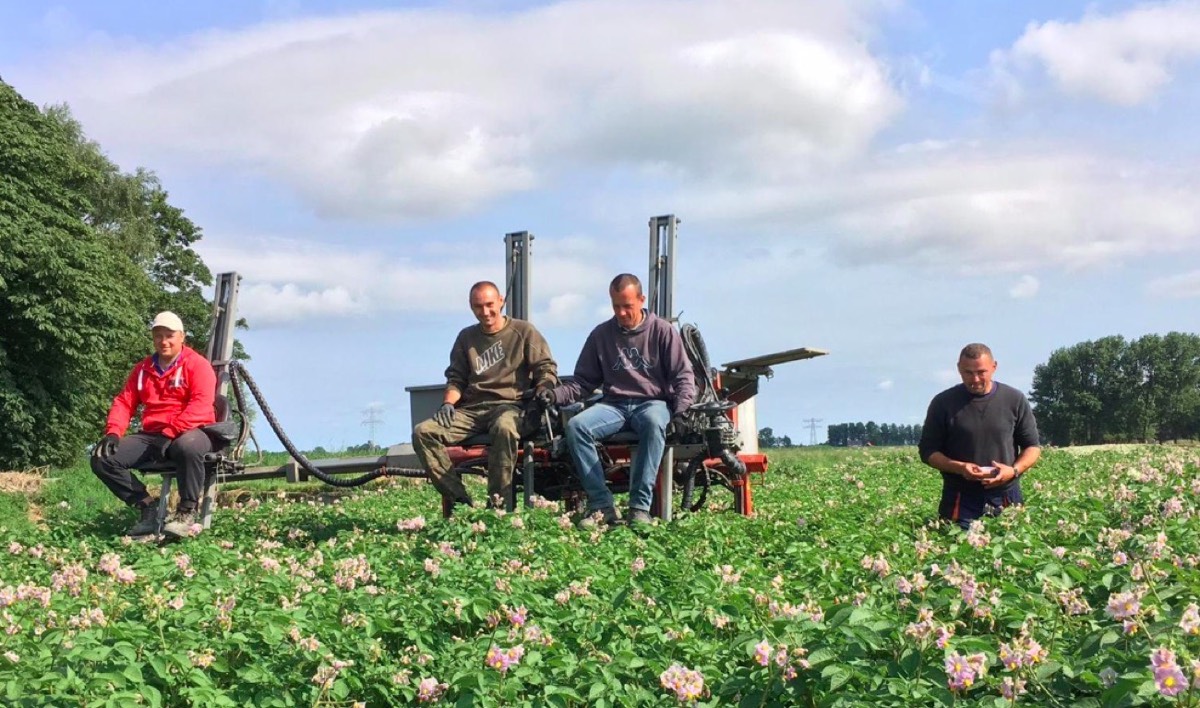
Four million tubers a year from a polder four and a half meters below sea level. Ted Vaalburg grows celeriac on a hundred hectares of Schermer sea clay and stores it with soil in cold storage, so you get the same firm tuber on your plate year-round.
The story
Who's behind it
Ted and Nicoline Vaalburg farm in the Schermer polder near Zuidschermer, on land four and a half meters below sea level. They're the third generation on the farm and took it over in 2007. What started with a few hectares has grown to 90 to 100 hectares of celeriac, spread over parcels in the Schermer, good for about four million tubers per year. Besides that they grow potatoes and pumpkins.
The tubers are sown in the greenhouse in February and planted out as seedlings in spring. From then they need about six months to grow into a firm tuber. The washing facility on the farm has been running since 1985, so washing and packing happen in-house.
What really makes the difference
Two things determine the tuber on your cutting board: the soil and the storage.
The sea clay of the Schermer gives a dense, compact tuber with few hollow hearts. Ted deliberately keeps the soil alive with his own compost and minimal crop protection, and drives with machines that minimize soil disturbance. His thinking is simple: an airy, oxygen-rich soil delivers a healthier crop. For you that translates into tubers that cut clean and hold their structure during cooking.
The second difference is storage. Part of the harvest goes into cold storage with soil. That way Ted supplies year-round, from the same crop, without you falling back on a soft import tuber in spring. Your menu doesn't need to shift with the season.
How to set yourself apart with this
Celeriac is cheap in purchase and big in yield, and for that very reason underestimated on the card. One tuber of this size delivers a main course, a garnish and a broth from the same product. Put the origin on explicitly: grown on sea clay in a polder below sea level, by a grower with a name. That turns a side dish into a story your guest remembers.
Because the tuber comes in year-round at consistent quality, you can build a signature dish that stays on. Not twelve weeks of peak and then scale back, but a dish you serve the whole year at the same standard. For a chef that reliability is worth as much as the flavor itself.
Chef’s tip
Roast a whole tuber low and slow on coarse salt until the heart is soft, about two hours at 180 degrees. The skin becomes a crust, the inside gets the texture of poached meat. Shave the raw edges alongside as a crispy garnish, so you use the whole tuber, outside to in, without waste.
How to use it
Ideas for your menu
Roasted tuber as main course
Whole tuber on salt, glossed with brown butter and thyme. Replaces meat as the center of a vegetarian plate.
Celeriac cream
Cooked in milk and pureed to a smooth base under game, smoked eel or a confited egg.
Raw remoulade
Fine julienne with mustard, apple and parsley. Fresh counterpoint to fatty fish or tartare.
Broth and ash
Skins and trim burned to powder for a smoky celeriac ash, base for a clear vegetable broth.
For your menu
“Celeriac from Ted Vaalburg, grown on sea clay in the Schermer polder”
Products from Ted Vaalburg
What we carry from this maker
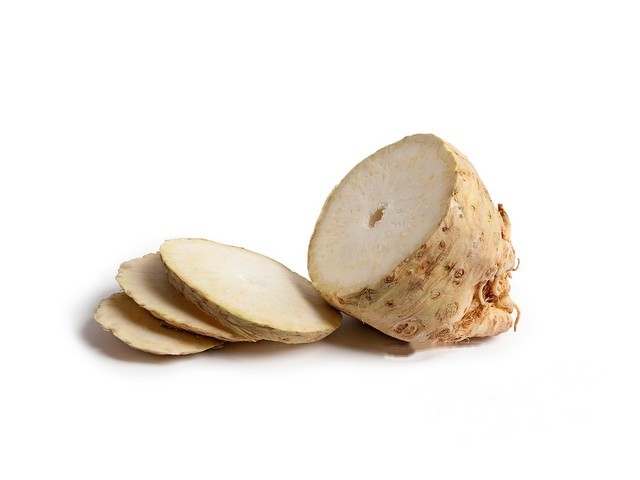
Knolselderij
Prices and availability are in the portal. Not a customer yet? Become a customer or log in to order.
Taste it in your own kitchen
Book a no-obligation tasting with Niels. No contract, just tasting.