
Maker · Cheese
Oudwijker: Italian-style cheese from Dutch milk
Rutger and Marieke traded their office jobs for an apprenticeship at an Italian family cheesemaker. Back in the Lopiker region they now make Italian-inspired cheese from Dutch milk: cow from Cothen, buffalo from Heusden. Soft rinds, complex flavours, not a copy of an original.
The story
Who's behind it
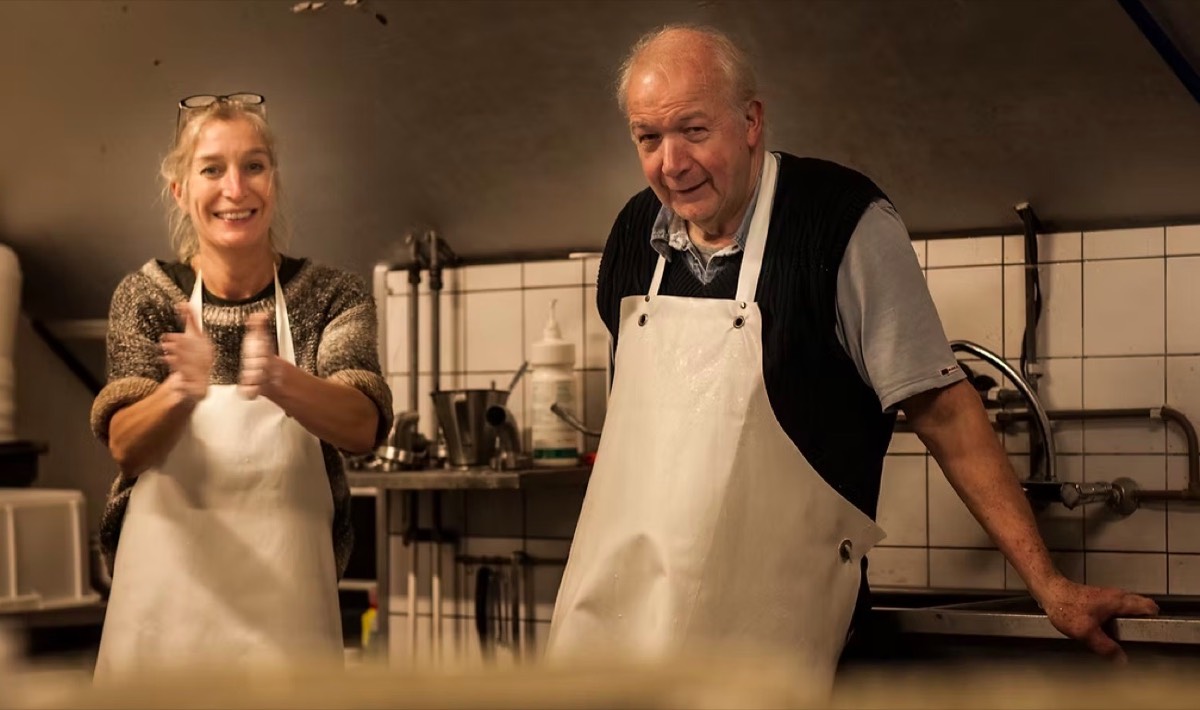
Oudwijker is Rutger and Marieke. About ten years ago they left their office jobs to learn cheesemaking, with an apprenticeship at an Italian family cheesemaking operation on Lago di Monate in northern Italy. Back in the Netherlands they started their own cheesemaking facility in Benschop, in the Lopiker region near Lopikerkapel. It's purely a production location of about 100 square metres, no retail space. Making happens five days a week.
They source milk from nearby. Rutger drives a mobile tank in his van to the farmer and picks up the morning milk himself. Cow milk comes from Brienenshof in Cothen, buffalo milk from the Vlemmix family in Heusden. Buffalo milk contains more fat and protein than cow milk, giving the cheeses made from it different ageing and a fuller texture.
What makes it different
Italian recipes, Dutch milk. The cheeses lean on known Italian styles but are pointedly not imports. Fiore and Toma Cigno follow the Taleggio method, Lazuli follows Gorgonzola, Toma Pietra follows an Alpine-style mountain cheese. Terroir, milk and technique each time create their own Dutch version.
Six cheeses, three rind types. Oudwijker makes red bacteria (Fiore, Stella), white mold (Toma Cigno) and blue mold (Lazuli, Colosso) alongside one another, plus the alpine cheese Toma Pietra. All with natural rinds that require time; Toma Pietra ages six to eight weeks, Colosso goes into wheels of about 12 kilos after two days of salting and turning.
Cow and buffalo under one roof. Two milk types gives you two registers on the menu. The cow cheeses are more approachable and broadly deployable; the buffalo cheeses Colosso and Stella are more characterful and demand a spot where they can stand out.
How to stand out with this
This is Dutch cheese that doesn't sound like Dutch cheese. On a board you tell a concrete story: made in the Lopiker region, from milk that left a farm in Cothen or Heusden that morning, using technique from Italy. That's verifiable and it tastes different from the standard foreign lineup. Serve Fiore or Toma Cigno warm and flowing in a dish, use Lazuli as a sauce, and keep Stella and Colosso separate for the moment when the cheese itself is the lead.
Chef’s tip
Colosso and Stella are buffalo cheeses with high fat and protein content. Let them come to room temperature and set them untouched on the board or let them just melt over a warm dish; high-heat frying breaks down the creamy structure.
How to use it
Ideas for your menu
Fiore over baked potato or in risotto
Red-bacteria cheese on Taleggio recipe. Melts young and creamy; use as a Taleggio substitute in risotto or let a slice melt over a baked potato with thyme.
Lazuli in a blue cheese sauce
Blue-veined cheese on a Gorgonzola base, salty, sweet and spicy with notes of pepper, wood and chocolate. Melts into a sauce for gnocchi or steak, or crumble over salad with pear and walnut.
Toma Cigno as warm, flowing cheese
White mold on Taleggio base, longer aged. Young: sweet and refined; older: lightly sour with thyme, fennel and nuttiness. Ideal for flowing over polenta, bread or roasted vegetables.
Stella and Colosso on the aperitif or cheese board
Two buffalo cheeses with character: Stella red-bacteria, lightly smoky towards leather; Colosso blue with cream, licorice, bay leaf and pure chocolate. Serve plain with nuts, honey or dark fruit.
For your menu
“Oudwijker from Benschop: Italian-inspired cow and buffalo cheese from Dutch milk.”
Products from Oudwijker
What we carry from this maker
Colosso
Blue mold from buffalo milk (Vlemmix, Heusden). Creamy ivory cheese with fine blue veins; creamy and sweet, then peppery, salty and woody with licorice, bay leaf, hay and pure chocolate.
Fiore
Red bacteria from pasteurised cow milk on Taleggio recipe. Young: fresh with citrus, beech nut and chestnut; older: more aromatic, lightly smoky and buttery.
Lazuli
Blue-veined from cow milk (Brienenshof, Cothen) on Gorgonzola base. Thick, rough natural rind; light yellow cheese with dark blue veins, soft and lightly crumbly. Salty, sweet and spicy.
Stella
Red bacteria from buffalo milk. Compact-looking but melting ivory cheese; lightly sweet and earthy with yeast, butter, hay, nut and white chocolate, older smoky towards stable and leather.
Toma Cigno
White mold from cow milk (Brienenshof, Cothen), longer-aged Taleggio variant. Rough rind with white interior, creamy cheese; young: sweet, older: complex with thyme, fennel, grass and nut.
Toma Pietra
Alpine-inspired mountain cheese from cow milk, aged six to eight weeks. Sticky orange-brown rind; firm, lightly crumbly interior that turns softer just under the rind. Sweet dairy, sour cream, wood and cardamom.
Prices and availability are in the portal. Not a customer yet? Become a customer or log in to order.
Taste it in your own kitchen
Book a no-obligation tasting with Niels. No contract, just tasting.