
Maker · Beef
Ouderkerks Blond
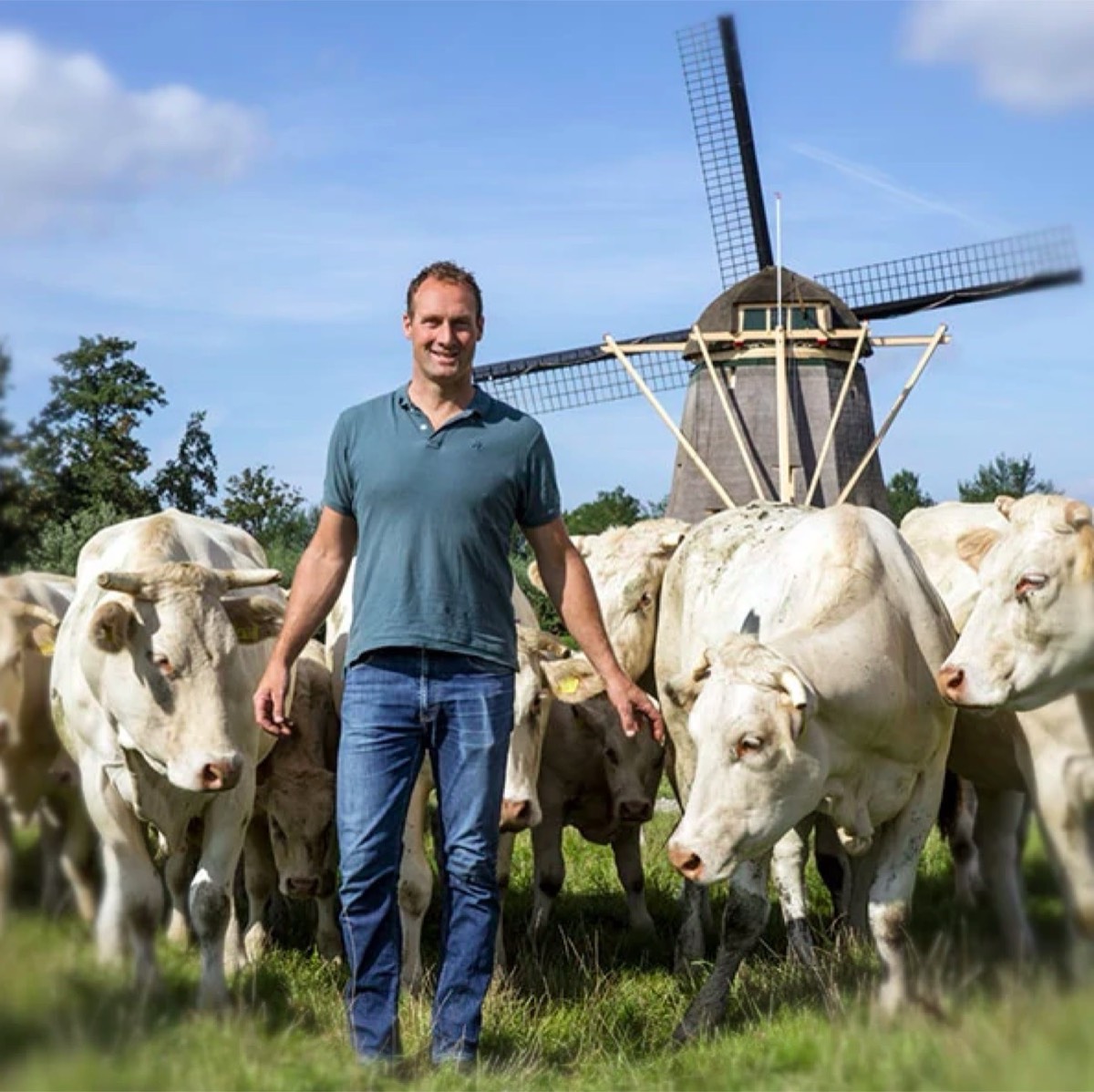
The ragout in this bitterball comes from one herd of Blonde d'Aquitaine grazing on the Duivendrecht polder, ten minutes outside Amsterdam. Farmer Gijs de Nooij breeds, raises and processes it himself. You can trace the bitterball back to the pasture.
The story
Who's behind it
Gijs de Nooij farms at Boschlust in Ouderkerk aan de Amstel, on the edge of Amsterdam. His great-grandfather bought the farm in 1924; Gijs is the fourth generation and took over the business definitively in 1999. He raises cattle of the Blonde d'Aquitaine breed, originally a French beef breed. The herd numbers about 250 animals, with approximately 80 breeding cows. The cows calve naturally, with bulls running with the herd.
From April through October or November, the animals are outside, on the Duivendrecht polder and land managed by Landschap Noord-Holland. In winter they're on straw. Gijs sells through his own farm shop under two names: Ouderkerks Blond and Vlees van Gijs. At Jimmy Loves Food, it's the processed products: bitterballs and croquettes from his own beef.
Why this beef
The ragout comes from animals Gijs raises himself, on pasture you can see from the A2. One breed and one herd, from a farmer who breeds and processes himself.
The grassland is herb-rich, and according to Gijs you taste that in the meat. Blonde d'Aquitaine is also a slow-growing beef breed with finely marbled meat. When a guest asks where the meat comes from, you can give a name and a place.
In your kitchen
Name the farmer and Ouderkerk aan de Amstel on the menu, and charge the price that goes with it. Pair the bitterballs and croquettes with other regional products from the range, so the whole bar snack comes from nearby. Put the croquette on the lunch menu as a full dish too, on good bread.
“Herb-rich grass grows here, and you taste it in the meat.”
Chef’s tip
Put the croquette on the lunch menu or serve it as a main plate. Name the farmer and the place: beef from Gijs de Nooij, Ouderkerk aan de Amstel.
How to use it
Ideas for your menu
Bitterball with a name
The bitterball as the heart of your bar menu. Note on the menu that the ragout comes from one local herd.
Croquette as a lunch dish
On sourdough with whole grain mustard and a dressed salad.
Ragout as a building block
Use the beef ragout as a base under a vol-au-vent, in a pastry case or as a filling.
A local snack platter
Pair the balls with other regional products from the assortment, so the whole plate comes from the neighborhood.
For your menu
“Beef croquette from Ouderkerks Blond, one herd of Blonde d'Aquitaine by farmer Gijs de Nooij, from Ouderkerk aan de Amstel.”
Products from Ouderkerks Blond
What we carry from this maker

Bitterballen rundvlees Ouderkerks Blond 32g 60st
Prices and availability are in the portal. Become a customer or log in to order.
Taste it in your own kitchen
Book a no-obligation tasting with Niels and taste it for yourself.