
Maker · Cheese
Mathildes Kaas
A lactic-set soft cheese from organic Blaarkop milk, hand-ladled in Kockengen. Fresh and creamy with an earthy, mineral rind. Not a Dutch slab, but a cheese course on its own.
The story
Who's behind it
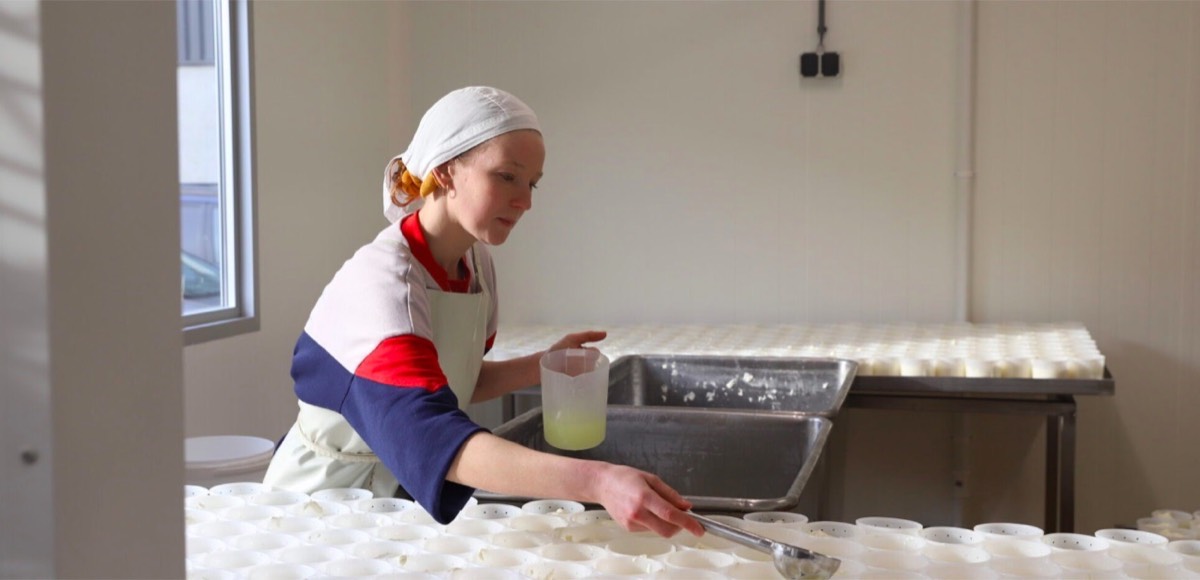
Mathilde van Otterloo started making cheese in late 2017. She learned the craft in France, on a farm in the Pyrenees, and has a background in sustainability and soil science. In the beginning, she made ten cheeses at a time and gathered feedback from family and friends until the recipe was right.
Now she works from a farm and cheesemaking operation in Kockengen. The milk comes from Blaarkoppen, a rare old Dutch breed that produces less milk than a conventional cow, but fuller and richer milk. Exactly what you want for a soft cheese with character.
What really makes it different
This is not a pressed Dutch cheese. Mathilde sets the milk lactic, with very little rennet, and hand-ladles the curds into small bowls. Then comes turning, salting and aging in the climate cabinet. The whole rhythm spans four days, from fresh milk on Monday to cheese on the racks by the end of the week.
After two to four weeks, blue mold appears on the rind. That brings earthy, mineral tones that contrast with the fresh, creamy core. There are two versions of the same recipe: Fransje from pasteurized milk and Hansje from raw milk. The raw milk version has more tension; the pasteurized is more approachable and consistent, handy if you want to feature it broadly on your menu.
The Blaarkop milk and long lactic setting together give a light, almost goaty freshness you rarely find in cow's milk cheese. That makes the cheese recognizable, even beside the rest of your plateau.
How you set yourself apart with this
Most cheese plateaus get stuck on the same young to aged formats. Fransje breaks that open: a soft, runny cheese with a blue rind and a name and face behind it. That tells itself at table.
Set it as a standalone cheese course instead of a finale on a plate. The minerality calls for roasted vegetables, ripe fruit or a spoon of honey, not another cracker. Want to complete the story? Simply name the origin on the menu: Blaarkop milk from Kockengen, hand-ladled. Specific enough to stand out, honest enough to tell.
“I find the aging and care of the cheese a very interesting part of the process.”
Chef’s tip
The rind brings the minerality, the heart brings the creaminess. Serve at room temperature and cut just before serving, so the core is still beginning to run. Leave the blue rind on: it's the flavor accent, not the packaging.
How to use it
Ideas for your menu
Cheese course with roasted red beet
The earthy, mineral rind runs parallel with slowly roasted beet. Finish with some nuts and a drizzle of good oil.
Through the risotto at the end
Stir in off the heat instead of grated hard cheese. Gives creaminess and a fresh, slightly goaty tone.
On toasted sourdough
Warm bread, a spoon of honey, some thyme. Simple side that lets the cheese do the work.
Platter next to ripe fruit
Pear, fig or grape. The fresh acidity stays light and calls for a full white wine.
For your menu
“Fransje from Mathildes Kaas, lactic-set Blaarkop cheese from Kockengen, aged 2 to 4 weeks.”
Products from Mathildes Kaas
What we carry from this maker
Fransje
From pasteurized Blaarkop milk, hand-ladled, 2 to 4 weeks aged, blue mold on rind. In the catalog.
Prices and availability are in the portal. Not a customer yet? Become a customer or log in to order.
Taste it in your own kitchen
Book a no-obligation tasting with Niels. No contract, just tasting.