Maker · Dairy
Laban
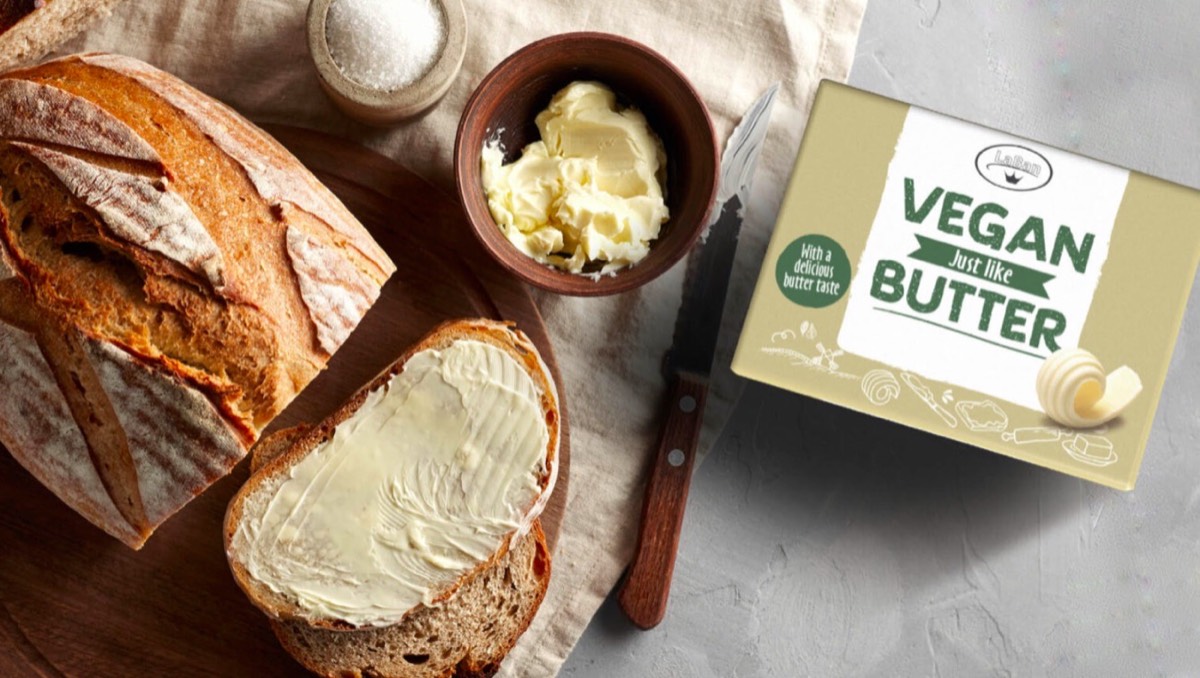
A plant-based butter that behaves in the pan and in the dough like dairy butter does. Laban has made fats and margarines for bakery and hospitality for decades, and sets the bar on behavior: melting, frying, spreading, mounting. The bill comes in lower, the technique stays the same.
The story
Who's behind it
Laban has focused for decades on fats and margarines for bakery and hospitality. Not a dairy farm, then, but a manufacturer that knows how fat behaves under a dough roller, in a hot pan and in a sauce that needs to bind at the end. From that corner comes the product we work with: a plant-based butter called "Just like dairy butter." The intent sits right in that name. Not mimicking the flavor of dairy butter, but the behavior.
We buy the 5 kilo block and store it refrigerated next to our dairy. For a kitchen that runs on volume that's a deliberate choice: a solid block you process just like you're used to.
What really makes the difference
The difference sits in two things: behavior and cost. It's a plant-based fat with a fat structure firm enough to laminate, creamy enough to spread and stable enough to mount cold. Melting, frying, spreading, mounting: the moves stay exactly as with dairy butter, so you don't need to learn any new technique.
The base is deliberately neutral. That means the sauce, the seasoning or the dough sets the flavor, not the fat. Then there's the bill: the price usually sits around 50 percent lower than dairy butter. Where you move kilos, that adds up directly, without any compromise on technique.
Important to be straight: this is not dairy. Where butter itself is the star, on the plate, with bread, in a beurre blanc that needs to taste like butter, real dairy butter is still the better choice. As a working fat next to your dairy, this adds something butter can't: the same grip at a lower price.
How to set yourself apart with this
Put this fat where the volume and margin sit, and keep dairy butter for the plate. Laminated doughs, pie dough, roux, fried garnishes and mounted sauces run fine on a neutral plant-based fat while your cost per portion goes down. That creates room to invest right in the products your guests will taste.
It also delivers a practical story to the guest: you can offer plant-based dishes with confidence without compromising structure or finish. Two fats in the house, each for its job, and a kitchen that knows why. That way, exactly what the guest should and shouldn't taste ends up in the right place.
Chef’s tip
Use the block where volume counts and the flavor still needs to be yours: laminated doughs, pie dough, roux and mounted sauces. The neutral base lets your seasoning, acidity and jus take the lead. Keep real dairy butter separate for the plate where butter flavor itself is the star.
How to use it
Ideas for your menu
Puff pastry and pie dough
Laminate with a plant-based fat firm enough for neat layers and a dry, crispy base.
Mounted sauces
Cold-mounted at the end for binding and shine, without the sauce trending dairy.
Frying and sautéing
Vegetable, fish and meat sautéed with a fat that handles the heat and gives a neutral base.
Cakes and cookies in volume
Large batches where consistency and margin weigh heavier than pronounced butter aroma.
For your menu
“The butter in our kitchen is partly plant-based, from Laban, which has made fats and margarines for bakery and hospitality for decades. Where butter itself must carry the flavor, we choose dairy butter.”
Products from Laban
What we carry from this maker
'Just like dairy butter' plant-based, 5 kilo block
Plant-based butter for pastry and hot kitchen
Prices and availability are in the portal. Not a customer yet? Become a customer or log in to order.
Taste it in your own kitchen
Book a no-obligation tasting with Niels. No contract, just tasting.