
Maker · Vegetables
Kramer, sauerkraut from North Holland
Nine out of ten jars of sauerkraut in the Netherlands come from one barn in Zuid-Scharwoude. Kramer has been fermenting on the same spot since 1890, with white cabbage from the cabbage fields nearby and the lactic acid bacteria already on the leaves.
The story
Who's behind it
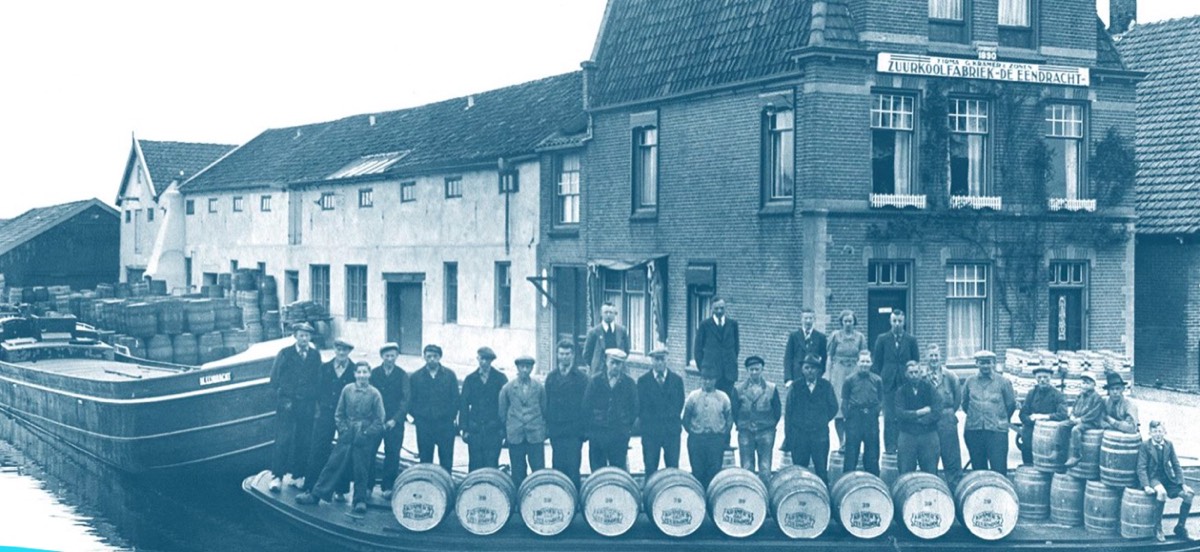
In 1890 Gert Kramer began preserving white cabbage in a shed behind his house in Zuid-Scharwoude, because deliveries from others came too late. From that shed grew the largest sauerkraut producer in the Netherlands. An estimated 90 per cent of the sauerkraut that appears on Dutch tables comes from this facility. The business still sits on the same spot on Voorburggracht and is now in its fifth generation.
The Langedijk and the Kop van Noord-Holland have been the country's cabbage-growing region for over a century, the cabbage barn of Europe. Kramer sources white cabbage from its own fields and from growers in the immediate area. On a peak day around 100 tonnes of cabbage go through the facility. A single head easily weighs around 8 kilos.
How it's made
Sauerkraut is one of the oldest ferments there is, and Kramer keeps the process deliberately simple. The cabbage is cleaned, sliced and salted. Then the lactic acid bacteria that occur naturally on the leaves slowly convert the sugars into lactic acid. Only cabbage and salt go in. In the sealed tuns the first fermentation takes about three weeks.
Two kilos of white cabbage yield one kilo of sauerkraut. A hectare produces around 100,000 kilos of cabbage. Much of the sauerkraut stays unpasteurised, so the living cultures remain. Kramer has been packing in bags since 1963. Besides the plain version there's a sauerkraut prepared with wine, and for the kitchen a raw pail you finish yourself.
In your kitchen
With the raw 10-kilo base you're in charge: you decide how far you braise it, with which wine, which fat and which spice, and how much tang you keep.
The living, unpasteurised sauerkraut also makes a fresh, raw garnish with clean acidity, good with game, smoked fish and vegetable mains. On the menu you can name Zuid-Scharwoude and the year 1890.
Chef’s tip
Take raw sauerkraut from the 10-kilo pail as your base and braise it yourself: with white wine, fat and juniper berries you tune the flavour and acidity to your dish. Keep the plain 500-gram version separate for raw garnish, where you want the crunch and living tang.
How to use it
Ideas for your menu
Sauerkraut with wine for game
Raw sauerkraut braised slowly in white wine and fat, as the classic pairing for pheasant, venison or duck.
Raw sauerkraut as bright garnish
Plain sauerkraut unadorned through a salad or over smoked fish, for tang and bite.
Sauerkraut with a vegetable main
The clean acidity as contrast against roasted root vegetables, beans or grains.
Quick sauerkraut dish with sausage
Braised sauerkraut with a sturdy smoked sausage or belly, straight from the pail to temperature.
For your menu
“Sauerkraut from Kramer, naturally fermented in Zuid-Scharwoude (North Holland), from regional white cabbage.”
Products from Kramer
What we carry from this maker
Sauerkraut plain, 500 grams
Naturally fermented, handy pack for raw use and portion work.
Sauerkraut raw, 10-kilo pail
Unbraised base for the kitchen, finish to taste and dish as you like.
Sauerkraut wine, 500 grams
Braised with wine, ready to use as a classic garnish.
Prices and availability are in the portal. Become a customer or log in to order.
Taste it in your own kitchen
Book a no-obligation tasting with Niels and taste it for yourself.