
Maker · Vegetables
Klootwijk
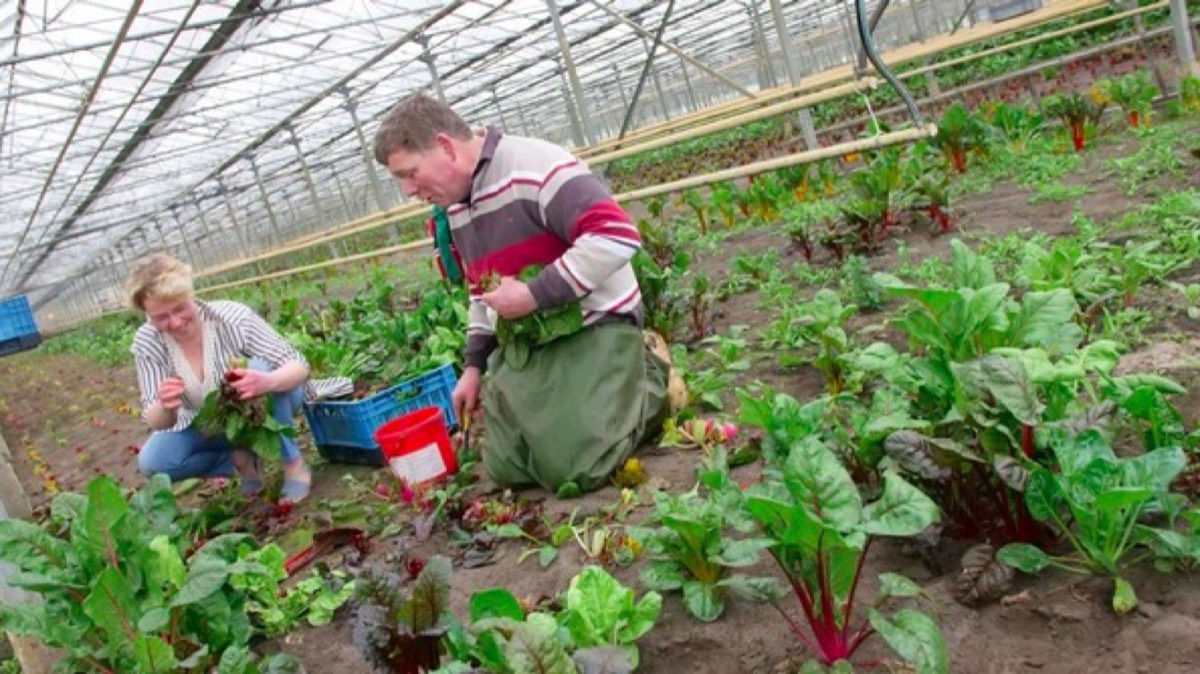
Brother and sister grow over 350 varieties in an unheated greenhouse in Raamsdonk, without chemicals and with their own seed. What is cut in the morning arrives the same day. For you that means cabbages and leafy greens with structure that survives a quick sauté or raw salad with flying colours.
The story
Who's behind it
Klootwijk in Raamsdonk runs on brother and sister Cees and Janneke Klootwijk. Their father was in potatoes and chicory, their mother in strawberries and onions. The next generation went a different way. Cees grows a handful of steady crops like chard, bok choy and coriander. Janneke takes the rest and that's hundreds: distinctive cabbages, herbs, edible flowers, exotic cucumbers and microgreens. Together they hit over 350 varieties per year, with about 25 new in trial. A crop gets three years to prove itself.
They grow on 2.5 hectares of greenhouse on river clay and sand layers, a soil that suits cabbages and leafy greens. The greenhouse hasn't been heated for years.
What really sets it apart
No chemical pesticides are used here. Against aphids come ladybugs, seed is sown by the moon and they save much of the seed themselves. Wageningen University does research into the insects in the greenhouse. The growing is not organically certified but is GlobalGAP and PlanetProof.
The difference you notice on your cutting board lies in two things. First, the cold cultivation: without heating everything grows at its own pace, and slower-grown leaf has more structure and dry matter. Second, the harvest. What is ordered is cut the same day and weeds are pulled by hand. No days cooling between field and kitchen. You notice it in a turnip green that stands upright after two days and kale that doesn't arrive limp in the box.
How to set yourself apart with this
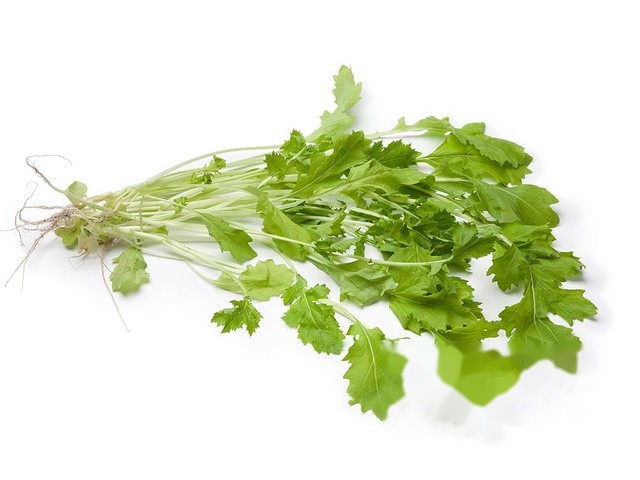
Purple kale and turnip greens are not filler vegetables. The kale is firm enough to work raw: strip it from the rib, massage briefly, and you have a salad that holds colour and bite to the plate. Blanch it and the purple shifts to deep green, so decide in advance what you want on the plate. Turnip greens are lightly bitter and want thirty seconds, no more. Set that bitter against something sweet or rich.
And because Janneke grows hundreds of varieties and switches weekly, you can look beyond these two. Ask about the seasonal specials and you're putting something on the menu your neighbour down the street doesn't have. That's exactly what this cultivation is built on: the end-user who wants something that comes from nowhere else.
Chef’s tip
Don't treat purple kale as stew vegetable. Strip the leaves from the rib, massage them a minute with salt and oil and the fibre breaks without cooking. Raw it keeps its purple; briefly blanched the colour shifts to deep green, so choose deliberately. Turnip greens you want no longer than thirty seconds in the pan.
How to use it
Ideas for your menu
Raw purple kale with apple and hazelnut
Massaged leaves, sharp apple, roasted hazelnut and mustard dressing. A fresh salad that holds colour and bite to the table.
Turnip greens à la minute
Thirty seconds in hot oil with garlic and chilli, finish with lemon. A green side that you make only on service.
Blanched kale with fish
Quick through boiling water so the purple shifts to deep green, then cold rinse. Fills a plate with fried fish without overwhelming the flavour.
Bitter greens with sweet
Turnip greens against parsnip puree or burnt shallot. Play the light bitter against something sweet and warm.
For your menu
“Purple kale and turnip greens from Klootwijk, Raamsdonk. Day-fresh from the cold greenhouse, grown without chemicals.”
Products from Klootwijk
What we carry from this maker
Raapstelen
Prices and availability are in the portal. Not a customer yet? Become a customer or log in to order.
Taste it in your own kitchen
Book a no-obligation tasting with Niels. No contract, just tasting.