
Maker · Vegetables
Vegetables from Josse and Thias
On one and a half hectares in the Betuwe, pigs run ahead of the vegetables. They root, manure and clean up; then Thias plants. No artificial fertilizer, no heavy machinery, just vegetables that thrive on soil where an animal has just worked.
The story
Who's behind it
Josse Haarhuis (28) keeps pigs and livestock on Rustenburg Estate in Ingen, in the Betuwe. He rents about one and a half hectares there. Grower Thias Bos does the vegetables on that same land. Together they run one system instead of two separate businesses side by side: the livestock and the growing are in the same loop.
Thias supplies restaurants and pop-up dinners, so he's used to growing for what a kitchen asks for. Besides open-ground vegetables, he grows sprouts, cresses and edible flowers. Josse and Thias have also planted elder and sea buckthorn, so there's taller greenery growing among the crops.
What really makes it different
The order is reversed. With most growers, soil is the starting point and fertilizer comes from outside. Here it starts with the pig. Josse divides his field into strips. The pigs roam freely over a strip, eating whatever's growing there plus residual food streams, and root up the soil as they go. When a strip is ready, Thias plants and sows on it. After the harvest, the pigs go over it again to clean up, and the cycle begins anew.
That means no artificial fertilizer and no heavy machinery for soil preparation; the animal does that work. The soil gets rest in between with green manures like clover. The result is vegetables grown on soil rich in soil life, and a farm where little leaves the field without coming back somewhere else.
How to set yourself apart with this
You're buying vegetables here with an origin you can explain at table: the field in Ingen, the pigs up front, the growing behind them. For a menu or a conversation with the guest, that's concrete and checkable, not vague sustainability talk.
Practically it gives you two things. One: vegetables grown for restaurants, so custom-grown and on rotation, which means you can coordinate early on what you need. Two: vegetables, sprouts, cresses and flowers from the same soil, so your plate stays consistent in taste and you can do more with one supplier. Ask what's coming and build your dish around it.
“We've built our system around the pig.”
Chef’s tip
Call early in the season and ask what comes out of the ground in three weeks. Josse and Thias grow on rotation for restaurants, so you can build a dish around a harvest instead of the other way around. Take the small harvests: sprouts, cresses and edible flowers come from the same soil and save you a second supplier.
How to use it
Ideas for your menu
Kale, quick and hot
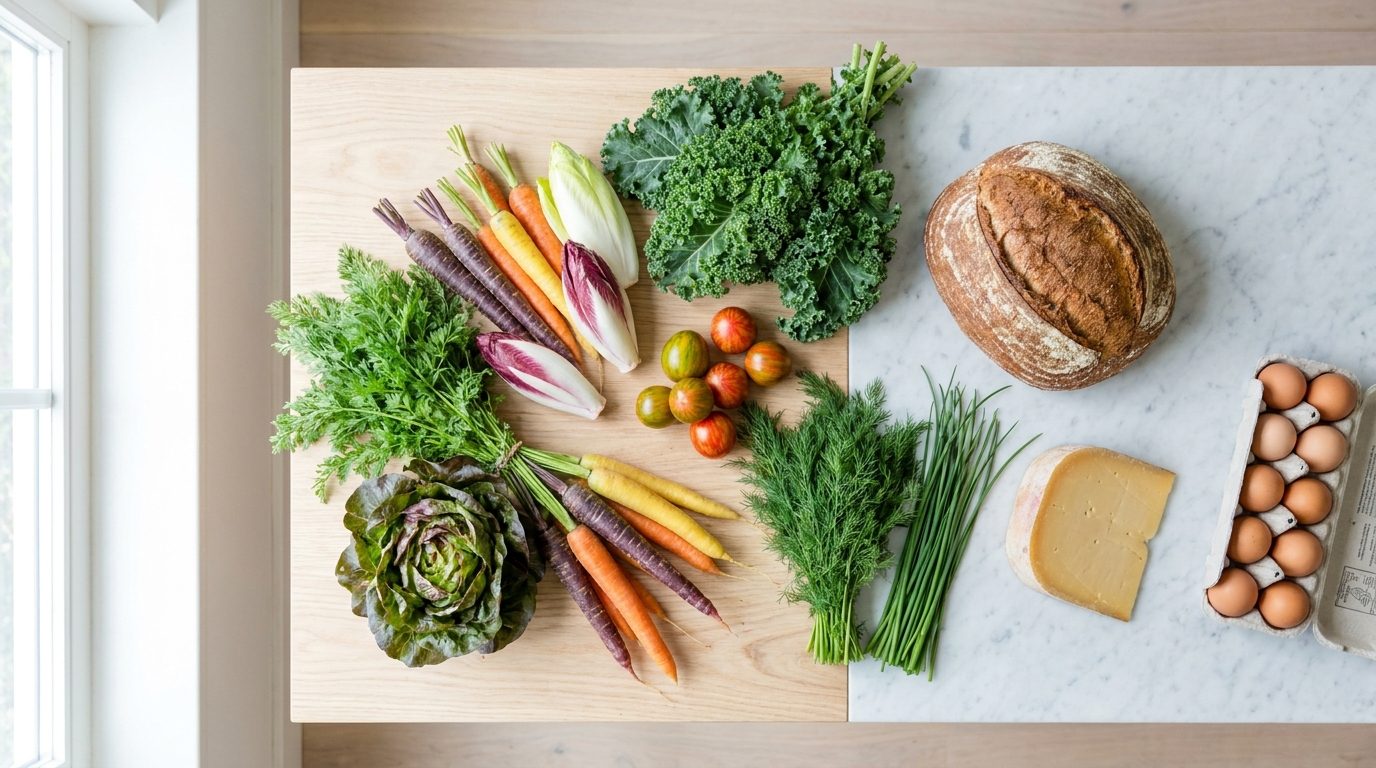
Blanch the cavolo nero briefly, then quickly roast it in the pan. Open-ground leaves hold their bite and slight bitterness; works as a side dish or under fish.
Seasonal vegetables from the roaster
Whatever's ripe that week, whole or in thick pieces roasted. Few interventions, because the flavor is already in the vegetable.
Finish with sprouts and cresses
Raw over a warm plate for sharpness and texture. Same origin as the vegetable, so consistent in taste.
Plate with edible flowers
For the lighter work in spring and summer: raw or lightly cooked vegetables with flowers from the same field.
For your menu
“Vegetables from Josse and Thias, grown circularly in Ingen: the pigs go first, the vegetables follow on their soil.”
Products from Vegetables from Josse and Thias
What we carry from this maker
Open-ground seasonal vegetables
Varying per period, grown on rotation after the pigs.
Sprouts and cresses
Small harvests from the same soil, for finishing and sharpness.
Prices and availability are in the portal. Not a customer yet? Become a customer or log in to order.
Taste it in your own kitchen
Book a no-obligation tasting with Niels. No contract, just tasting.