
Maker · Base
Fermi: Dutch umami from the fermentation chamber
Miso from pumpkin seed flour left over from oil pressing. Garum from American crayfish that need to be removed from our waters. Fermi builds umami from what others throw away, and puts that depth in a spoon on your plate.
The story
Who's behind it
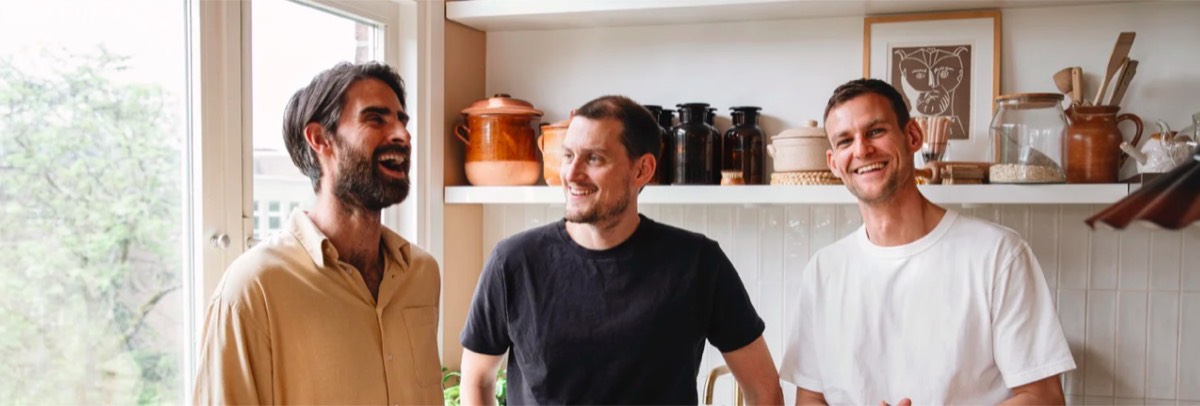
Fermi was set up by Tjerk Zumpolle, Josh Kröse and Splinter Dreesmann. They were gripped by the fermentation work at Noma in Copenhagen, where fermented seasonings form the base of the kitchen, and wondered why the Netherlands didn't have its own version. No importing Japanese miso then, but miso from what grows and remains here.
The three joined the Food Pioneers programme at Flevo Campus, which connected them with coaching and a network in food innovation. That's also where they ran into the real world: Dutch food safety rules aren't written for fermentation, especially not for upgrading waste streams into something you serve guests. That work is now in every pot.
What really sets it apart
The starting point is the waste stream. The pumpkin seed miso comes from pumpkin seed flour left over from oil pressing. The rye miso uses heritage Dutch rye. For garum, Fermi looks at the American crayfish, an invasive species that needs to be removed from our waters anyway. What would normally be waste or a problem becomes the raw material for flavour.
This is no marketing gimmick but a kitchen choice. Miso and garum are salt-rich, enzyme-rich seasonings: they break down proteins into free amino acids, and that's precisely where umami comes from. One spoon gives a dish depth, complexity and balance you can't get with salt alone. So you're not buying an ingredient but a tool that works in the background.
The chain is deliberately short and visible. Ingredients are local and seasonal, and collaborations run through names you know: Fermi makes the mushroom shoyu with Rotterzwam, and for chicken skin they approached Johan Leenders of Oranjehoen.
How to stand out with this
These seasonings do their best work in the background, not taking the spotlight. A line of rye miso under a vegetable dish, a few drops of seaweed garum over raw fish, a splash of mushroom shoyu through your jus: the guest tastes depth without naming the source.
For a plant-based or vegetarian menu that's a win. Umami that normally comes from meat, anchovies or stock, you get here from fermentation. And because the origin carries a story that rings true, from pumpkin seed to crayfish, you can tell it at the table without exaggerating. Concrete, Dutch, and made here.
“We want to inspire people to cook healthily, consciously and deliciously, while building a more sustainable food system.”
Chef’s tip
Treat the miso as salt plus body. Stir a tablespoon of rye miso through your beurre blanc or a glaze at the last moment, off the heat, so the living flavour stays intact. For fish and tartare, a few drops of seaweed garum works better than fish sauce: less sharp, more sea.
How to use it
Ideas for your menu
Rye miso glaze
Seaweed garum on raw fish
Mushroom shoyu jus
V'duja on toast
For your menu
“Fermi (NL): Dutch miso and garum from local waste streams, fermented for pure umami.”
Products from Fermi
What we carry from this maker
Pumpkin seed miso (pot 300 g)
Gentle, nutty miso from pumpkin seed flour from Dutch oil pressing.
Seaweed garum (bottle 200 ml)
Liquid umami with a sea tone, dose by the drop.
Mushroom shoyu (bottle 200 ml)
Fermented soy sauce on a mushroom base, made with Rotterzwam.
V'duja, plant-based n'duja (pot 200 g)
Spicy, spreadable fermented flavouring, completely plant-based.
Prices and availability are in the portal. Not a customer yet? Become a customer or log in to order.
Taste it in your own kitchen
Book a no-obligation tasting with Niels. No contract, just tasting.