
Maker · Meat
Buitengewone Varkens
Pigs that live outside their whole lives, at Ingen along the Rhine. Slaughtered at around ten months instead of six, fed on food waste streams, processed nose to tail. The fat is the selling point.
The story
Who's behind it
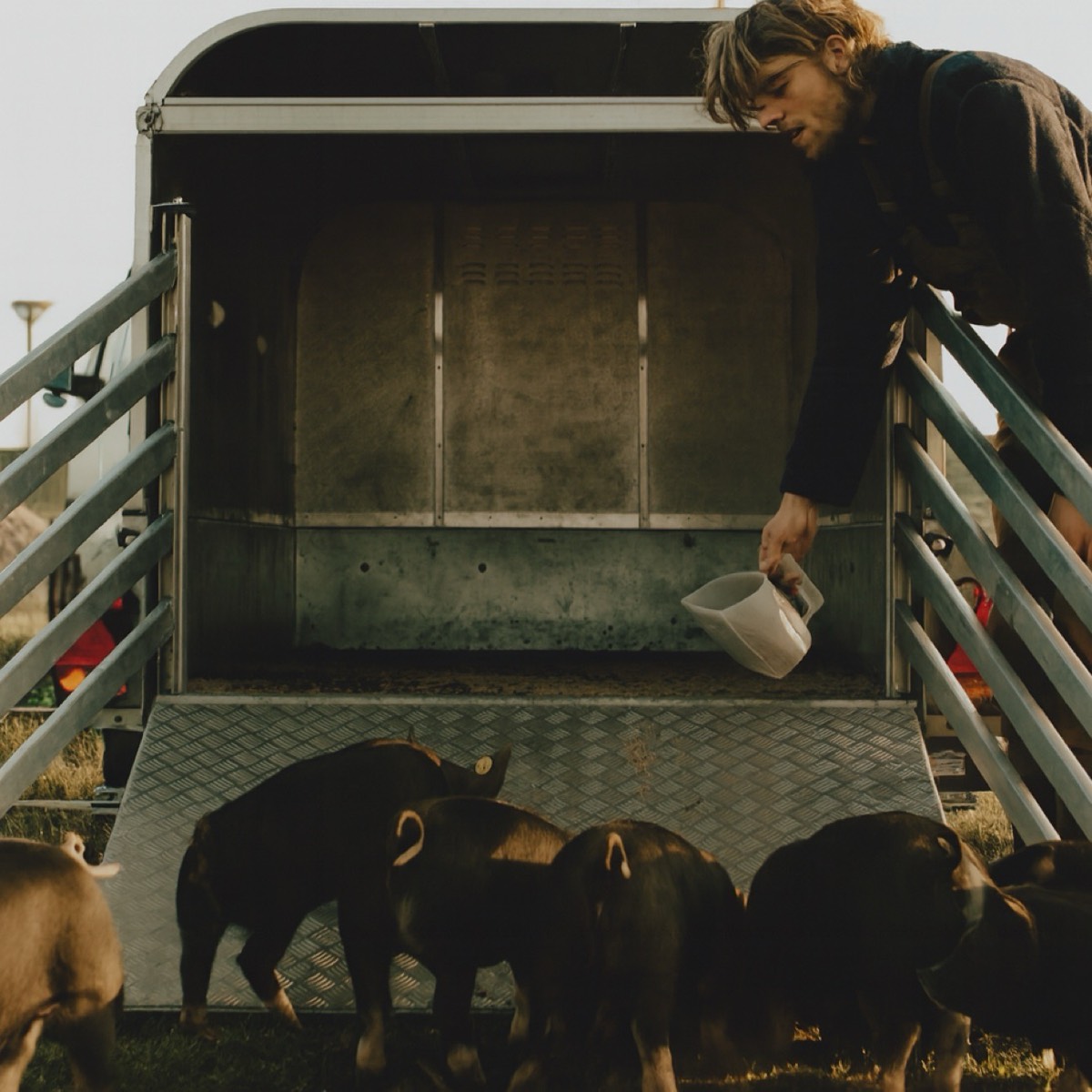
Cas den Boer and Josse Haarhuis keep pigs at Ingen, along the Rhine in Gelderland, that live outside their whole lives. They started small and grow at about 25 percent per year. The base is a herd of around ten sows, with about two hundred market pigs spread across multiple locations. The sows are Berkshire and Bonte Bentheimer, bred by a Duroc boar. That cross delivers meat with firm intramuscular fat marbling.
What really makes it different
The pigs are born outside and stay outside. A market pig here has a minimum of sixty square meters, often more, which amounts to 25 to 40 times the space of an organic pig. Sows build their own nest; piglets grow up in family groups and stay eight to twelve weeks with the sow. Slaughter happens at around ten months, significantly later than the six months standard in conventional farming. That extra time, the movement, and rooting in the ground show up in the color and flavor of the meat, and in fat that comes to temperature without melting right away.
The feed is circular: food industry waste streams instead of specially grown concentrate. Every piece of meat traces back to the farm. Buitengewone Varkens works with the whole animal and makes charcuterie in-house, from coppa and lomo to salami, pancetta, guanciale, and lardo. About eighty percent goes to restaurants, the rest directly to consumers.
How you set yourself apart with this
This is meat you can talk about at table without overselling. Breed, age, space, and origin are all verifiable. The fat is your selling point. Guanciale and lardo carry a dish on fat quality; the coppa and lomo sit on a board without decoration. Because you get the whole animal, you can build a menu running from premium cuts to sausage, with margins that work and minimal waste. For the guest who asks where it comes from, you have a concrete answer: a farm at Ingen, pigs that live outside, ten months of time.
Chef’s tip
Treat the guanciale and lardo as flavor-makers, not as an afterthought. Let the guanciale render slowly over low heat until the fat is glossy and build your dish on that fat; a pasta or plate of white beans lifts right off it. Slice the lardo paper-thin on warm bread and let it melt—it does more than an expensive oil.
How to use it
Ideas for your menu
Guanciale in the pan
Render it slowly and hold the fat for a carbonara or amatriciana. More body than pancetta, less salt than smoked bacon.
Charcuterie board pure
Coppa, lomo, and fennel salami side by side, served at temperature without garnish. Let the fat do the work.
Braised shoulder
Pulled pork from a ten-month-old animal. More bite and deeper flavor than fast-growing pork.
Bloodsausage with apple
Quick sear, a touch of apple acidity. Nose to tail on the plate.
For your menu
“Charcuterie and meat from Buitengewone Varkens in Ingen. Raised and born outdoors on Berkshire, Bonte Bentheimer and Duroc, around ten months, whole animal processed.”
Products from Buitengewone Varkens
What we carry from this maker
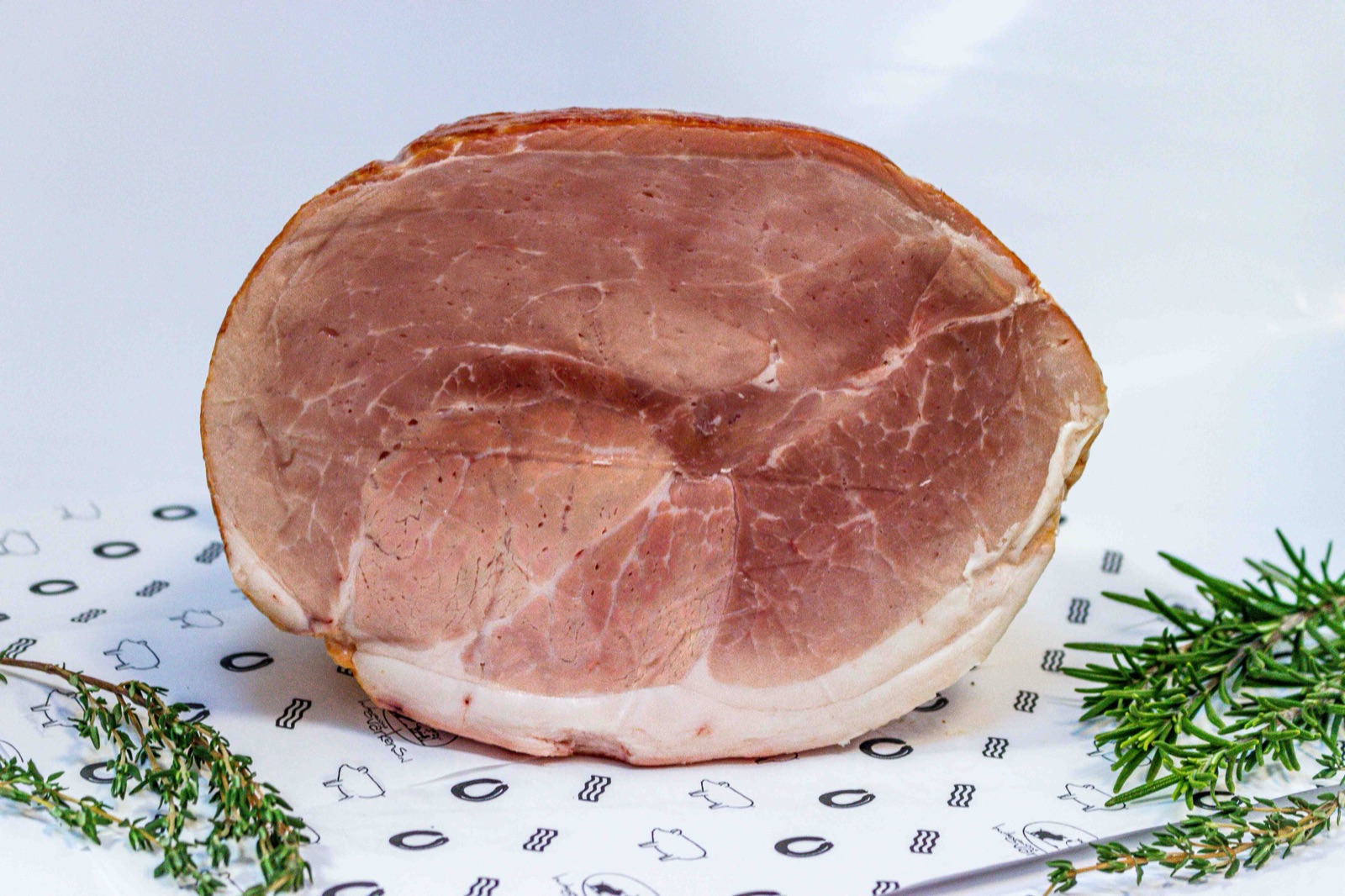
Achterham gekookt heel
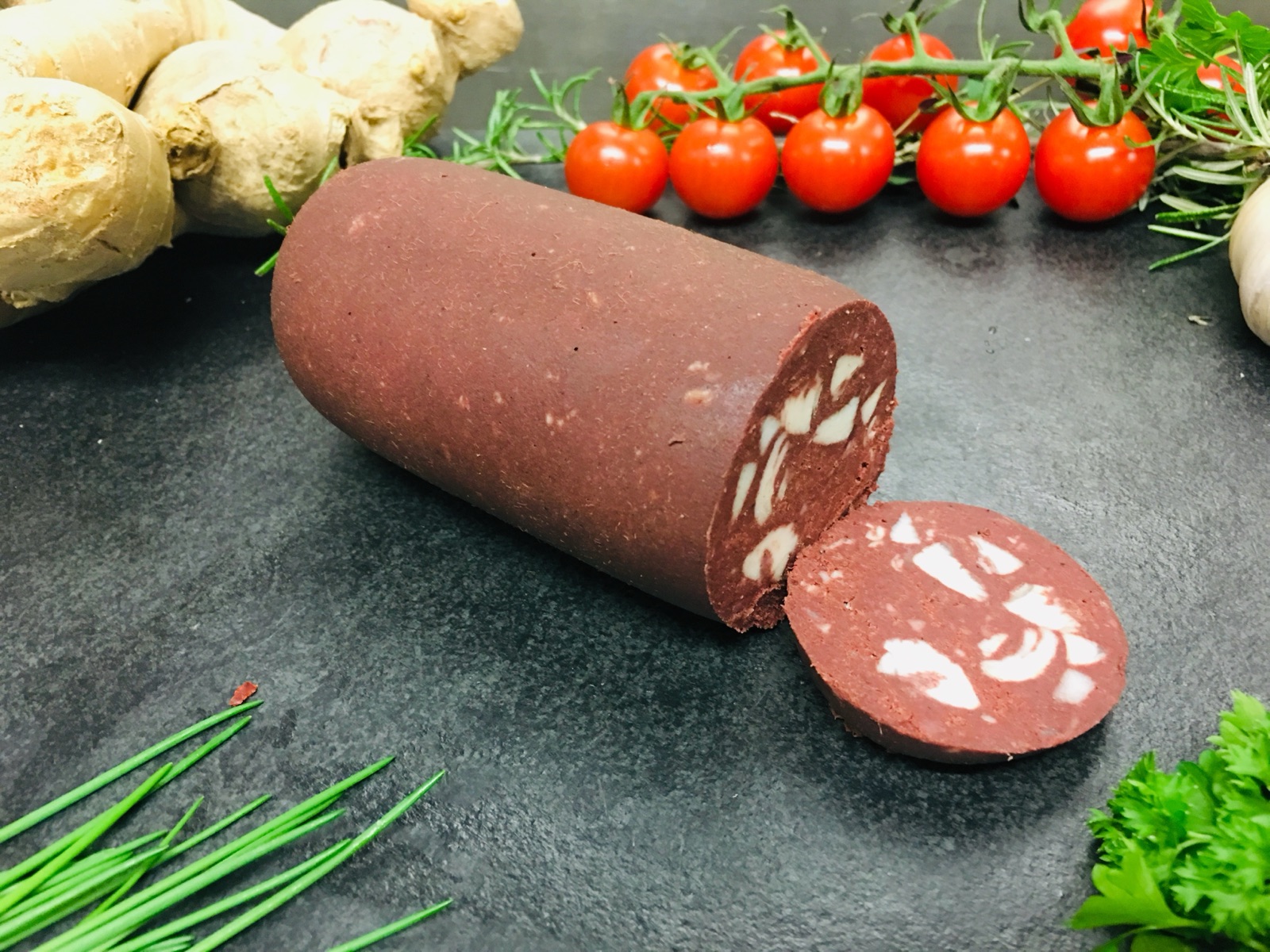
Bloedworst
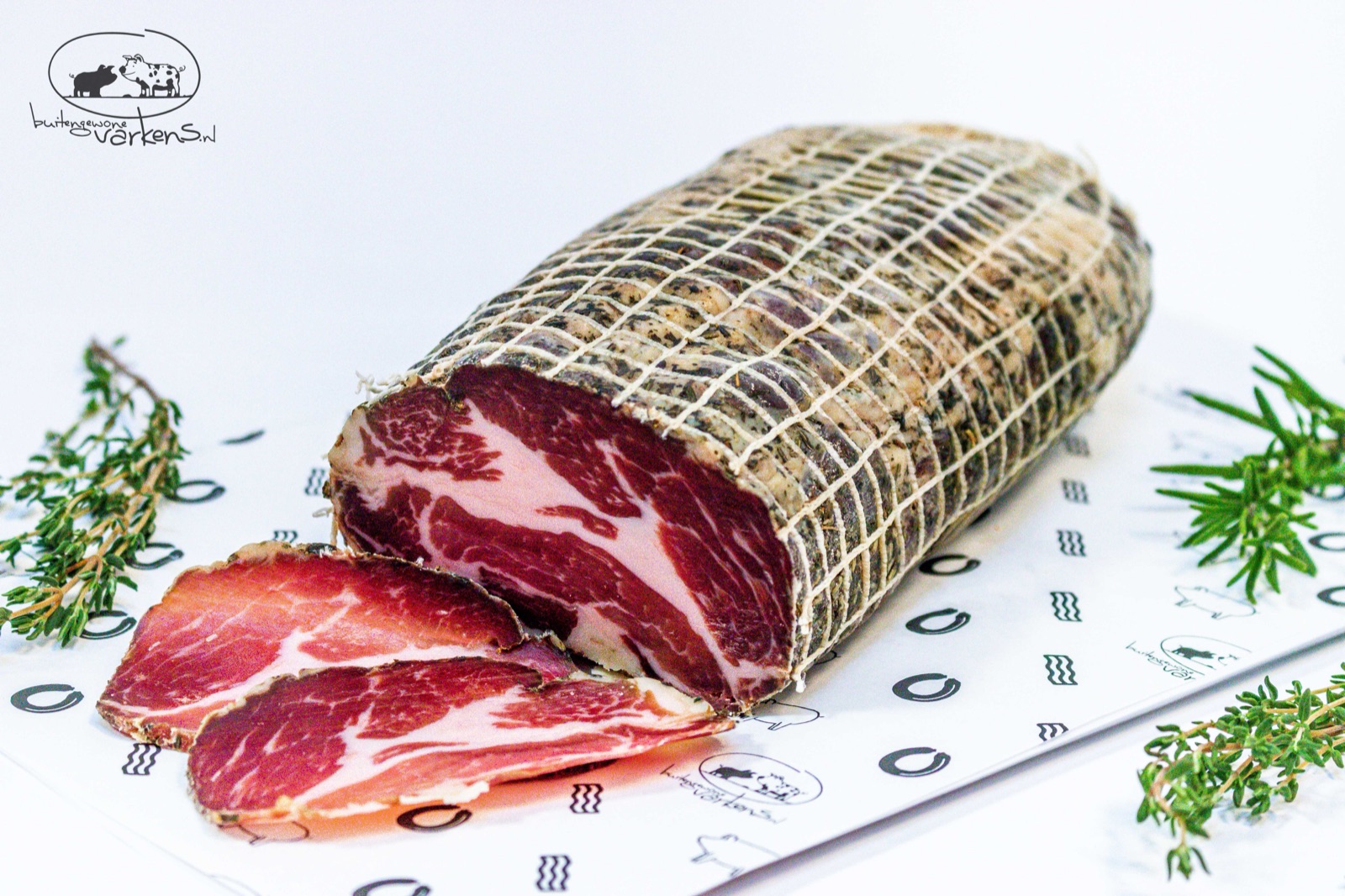
Coppa di Krekenburg
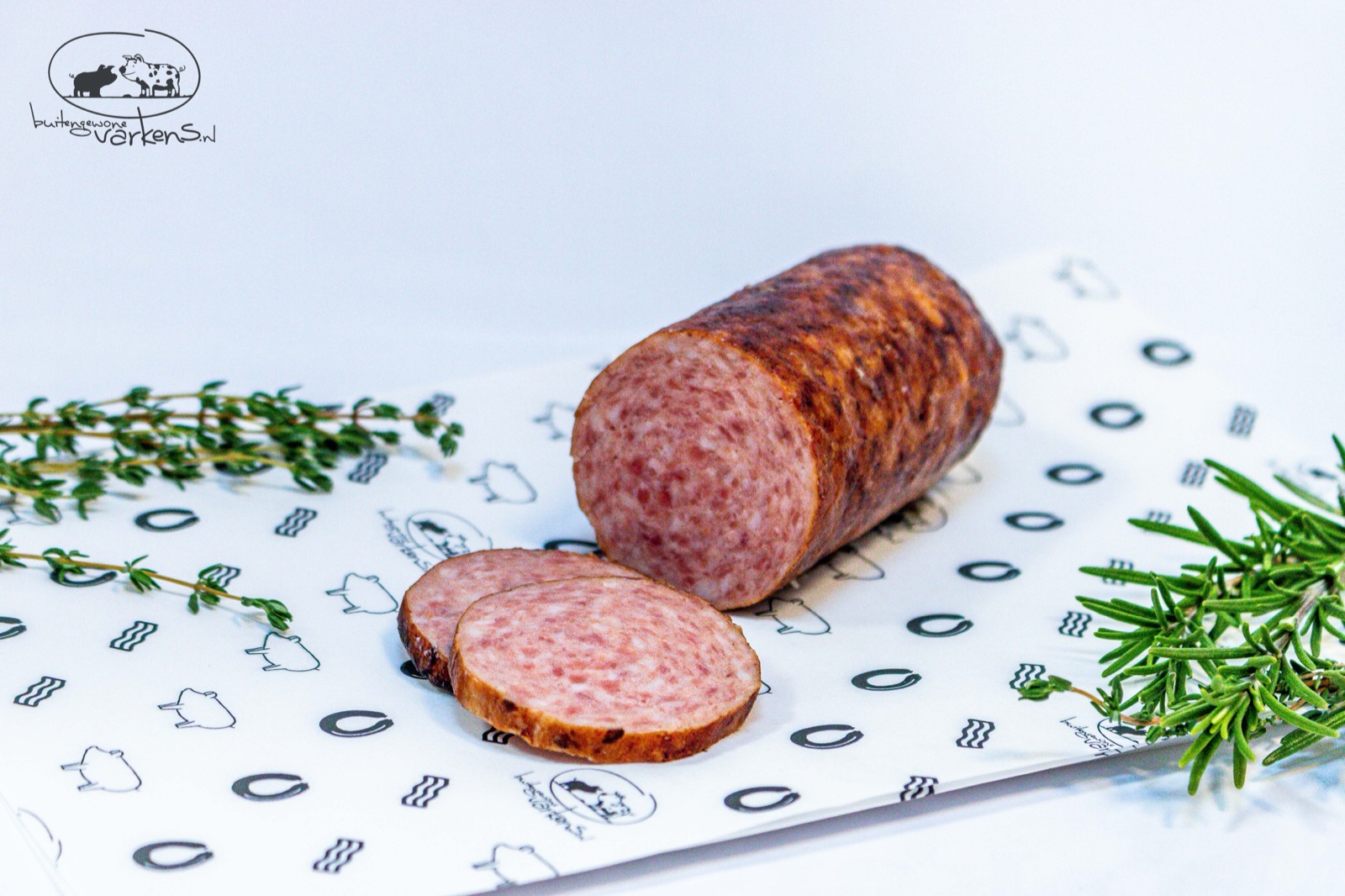
Grillworst
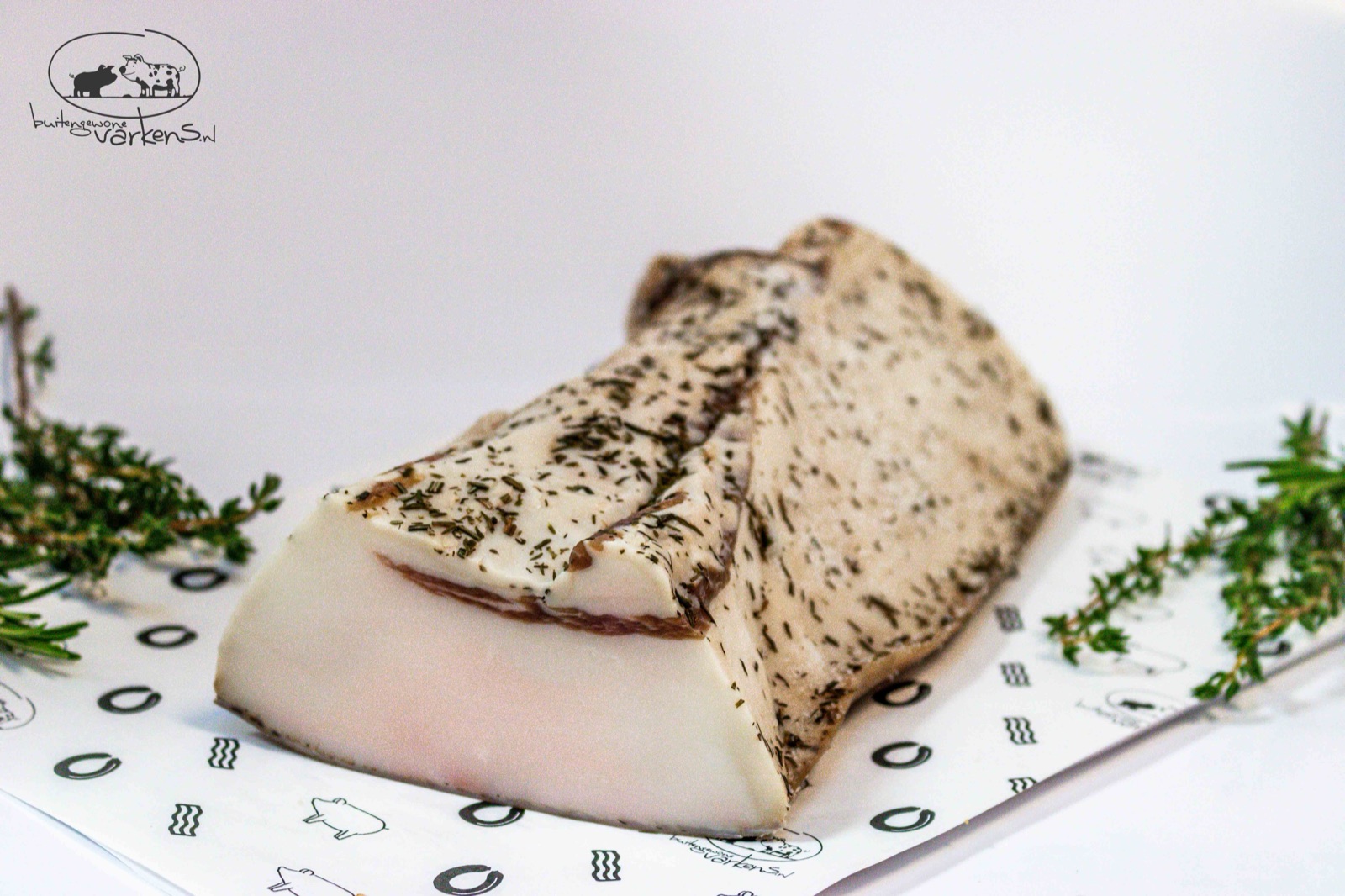
Lardo
Prices and availability are in the portal. Not a customer yet? Become a customer or log in to order.
Taste it in your own kitchen
Book a no-obligation tasting with Niels. No contract, just tasting.