
Maker · Vegetables
Bruin polderpeen: carrot with character from Dirkshoorn
Winter carrot from the Bruin family grows slowly on heavy polder clay in the head of North Holland. You taste it: deep orange colour, a sweet earthy flavour, and firm texture that doesn't collapse in the pan.
The story
Who's behind it
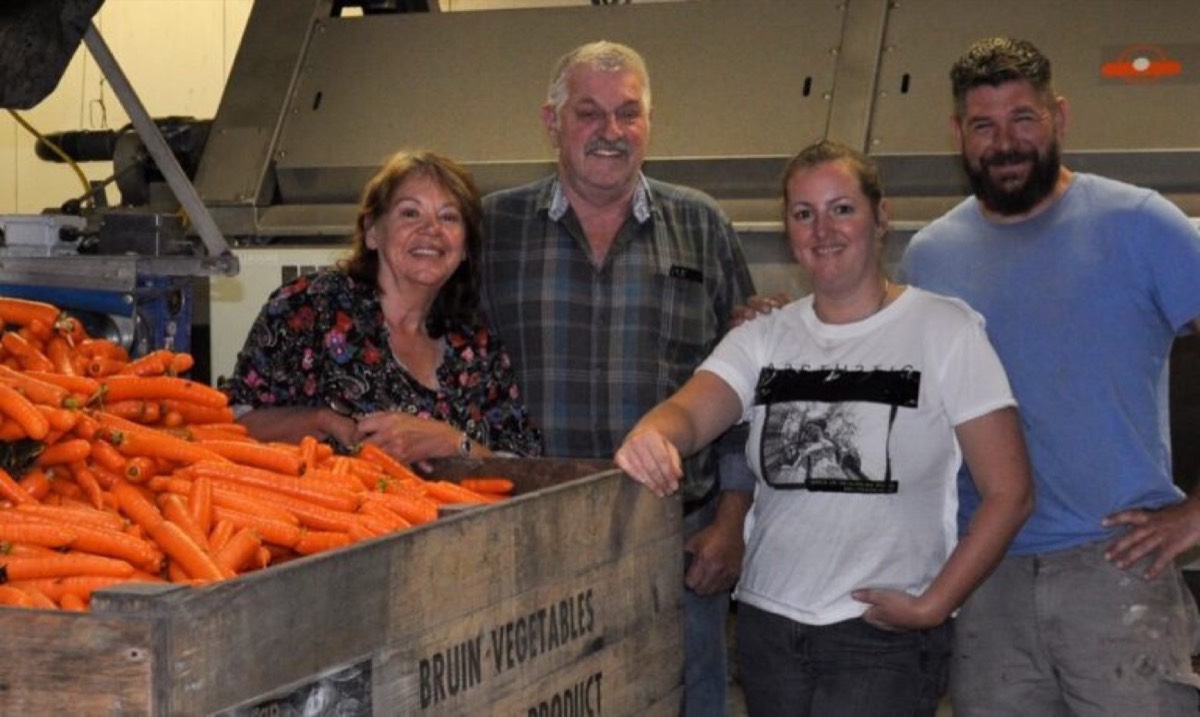
The Bruin family grows under the name Bruin Vegetables in Dirkshoorn, in the head of North Holland. The business sits on heavy, nutrient-rich clay soil from the polder and specialises in root crops. The approach is straightforward: crop rotation, careful soil management and years of expertise with carrots, without unnecessary frills. Alongside the winter carrot comes turnip from the same land, so you source multiple root crops from the same grower and soil.
What really sets it apart
The difference lies in the combination of heavy clay and slow growth. Carrots on clay grow slower than on light sandy soil and build more sugar and dry matter in that time. That gives the deep orange colour and sweet earthy flavour this carrot is known for. For the kitchen, texture is equally important. With high dry matter the carrot won't collapse when roasting, holds its shape in a puree and stays crisp if you work it raw or fermented. You get consistent material that works all four ways: roasted, pureed, fermented and raw.
It's a storage carrot. That means you get the same carrot from the same polder year-round, with predictable colour and flavour. For a kitchen built on consistency that removes surprises: the carrot you order in November behaves the same in March. You get it loose by kilo or in boxes of 20 kg, depending on your volume.
How to set yourself apart with this
Carrot is a basic product, and for that very reason, origin stands out. Put on the menu where this carrot comes from: Bruin family, the polder clay of Dirkshoorn, slowly grown. That turns a cheap vegetable into a regional story with a face behind it. Play the flavour by keeping the carrot whole. A whole roasted carrot as a vegetable course lets the sweet, concentrated flavour show better than finely chopped work in a mix. Combine the orange carrot with yellow winter carrot for colour on the plate, or place it beside the turnip from the same grower for a dish that's entirely from one polder. That's how you build a vegetable course you can't tell the same way anywhere else.
Chef’s tip
Roast thick whole pieces on a bed of coarse salt until the outside caramelises. With high dry matter this carrot won't collapse and the heart stays firm, so you get bite and concentrated, sweet flavour.
How to use it
Ideas for your menu
Roasted carrot with leaf celery and hazelnut
Whole or half carrot roasted slowly, finish with a fresh herb oil.
Fine carrot puree under fish or game
High dry matter gives a smooth, firm puree that won't turn watery.
Raw carrot ribbons with citrus
Thinly shaved the carrot stays crisp, beautiful against acid and salt.
Fermented carrot as garnish
Firm texture holds up through fermentation.
For your menu
“Winter carrot from Bruin family, slowly grown on the polder clay of Dirkshoorn”
Products from Bruin polderpeen
What we carry from this maker
Orange winter carrot (Bruin family, Dirkshoorn)
The core carrot of this page. Loose by kilo or in box of 20 kg.
Turnip (Bruin family, Dirkshoorn)
From the same land and grower, different root crop.
Yellow winter carrot
For colour contrast on the plate. Different Dutch grower.
Mini orange bunched carrots
Fine little carrots for spring and summer menus.
Prices and availability are in the portal. Not a customer yet? Become a customer or log in to order.
Taste it in your own kitchen
Book a no-obligation tasting with Niels. No contract, just tasting.