Maker · Meat
Beemsterlant's Varken
Pork from the Beemsterpolder by the Van der Mark family. Animals raised on straw, fed on whey from cheesemaker Cono and grain from the region, within a supply chain they largely control themselves. Meat with natural fat distribution and minimal cooking loss.
The story
Who's behind it
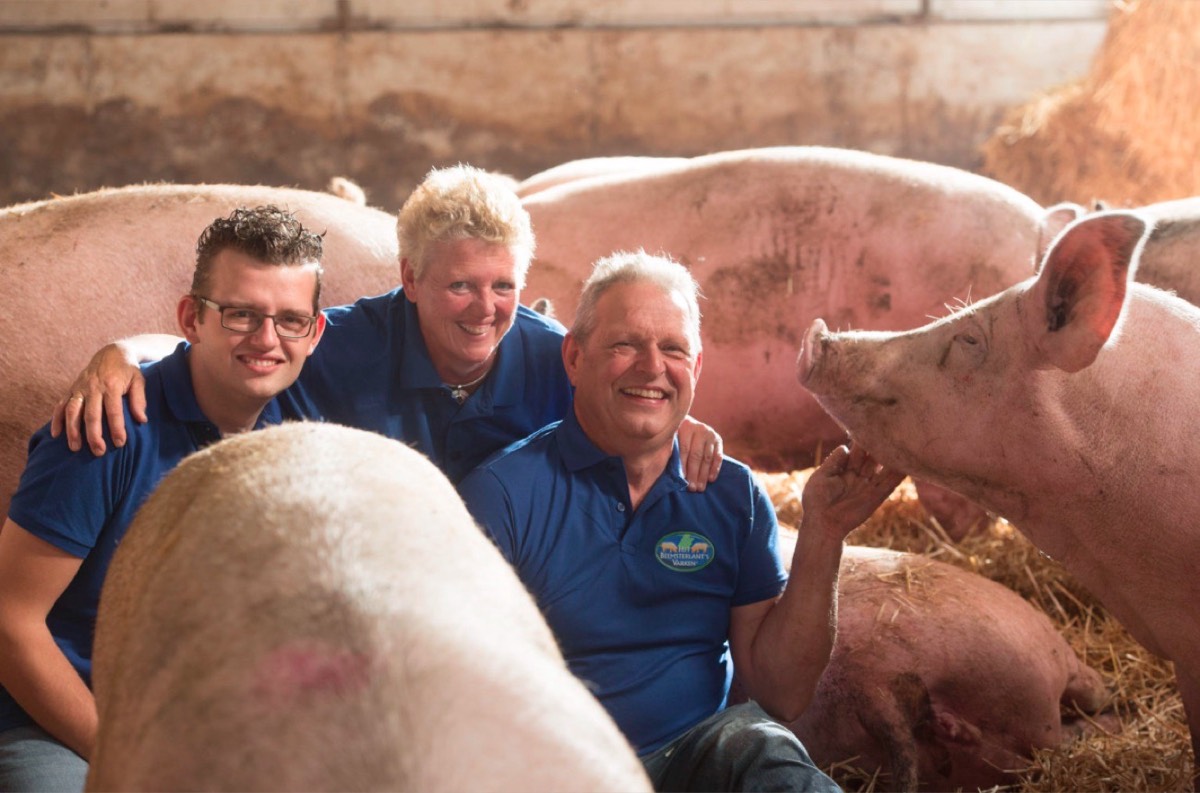
Beemsterlant's Varken is run by the Van der Mark family in Middenbeemster, in the heart of the Beemsterpolder. Arie-Jan and Yvonne started the farm, and now their son Tim works alongside them. It's a family operation with no outside staff, managing approximately 220 breeding sows and around 900 pigs destined for meat. It's a closed operation: piglets are born and raised on the farm itself, so the animals never travel from farm to farm.
Around 2007 they made the choice to sell under their own name rather than supply anonymously. Today, the vast majority of their pigs go through their own marketing channel to over 35 butchers, mainly in Amsterdam and the northern tip of North Holland. At Hobrederweg there's a viewing pen open seven days a week, all the way through to the farrowing house where you can watch the newborn piglets.
What makes it different
The distinction lies in the feed and the way they're raised. The breeding sows are kept on straw, not slats. The feed comes as much as possible from the surrounding region: whey from dairy cooperative Cono, the cheesemaker of the Beemster, plus grain and straw from grain farmers in the area. The manure goes back to the same suppliers. This keeps a large part of the cycle within the polder. Soy and antibiotics are kept to a minimum.
This translates directly to the meat. The butchers who buy from them consistently point to the same things: the right colour and flavour, natural fat distribution and minimal moisture loss during cooking. For your kitchen this means less shrinkage in the pan and better control over cooking times.
How to stand out with this
This is meat with an address. You can point to the exact farm on a map, describe how the animals were raised and what they were fed, without inventing anything. For a guest asking where it comes from, that's a concrete answer instead of a vague story.
The natural fat distribution and low cooking loss make the cuts that reward slow cooking especially interesting: neck, belly and shoulder come into their own with time. Pair that with the farm's own liver sausage and you can feature the entire pig on your menu, from a small starter to a main course. If you take sourcing seriously, here's a producer who controls most of their own supply chain.
Chef’s tip
The meat has natural fat distribution and releases minimal moisture when seared. This makes cuts like the neck and belly a gift for slow cooking: low and slow in the oven preserves structure and the fat marbling melts into the meat.
How to use it
Ideas for your menu
Neck, low and slow
Slow-cooked until the fat has melted through. The marbling does the work, keep seasoning restrained.
Belly off the griddle
First cured, then slow-cooked and glazed. Crisp rind, tender meat underneath.
Pork chop on the bone
Sear hot and fast, then rest. Minimal cooking loss keeps the chop juicy.
Liver sausage on bread
Made in-house at the farm, spreadable and full of flavour. Works as an aperitif or lunch dish.
For your menu
“Pork from the Van der Mark family, raised on straw in the Beemsterpolder and fed on whey from the region.”
Products from Beemsterlant's Varken
What we carry from this maker
Liver sausage
Made in-house from Beemsterlant's Varken, from Middenbeemster.
Pork cuts
Belly, neck, shoulder, chops and loin from across the supply chain.
Prices and availability are in the portal. Not a customer yet? Become a customer or log in to order.
Taste it in your own kitchen
Book a no-obligation tasting with Niels. No contract, just tasting.